
How Abuloy Became Tax in MCGI
- Geronimo Liwanag

- Dec 27, 2025
- 3 min read
Updated: Dec 27, 2025
A church changes character when its center of gravity shifts away from theology and toward performative service delivery and charity. Feeding programs, medical missions, and logistics-heavy charity work do not exist in a vacuum. They require steady funding, continuous labor, and organizational discipline. When these activities begin to dominate, the church starts to resemble a service enterprise rather than a purely religious body.
At that point, abuloy no longer functions as a voluntary offering. It begins to function as taxation.
Taxation is not defined by the state alone. It is defined by extraction. Regular contributions are expected. Non-participation carries moral cost. Pledges are monitored, followed up, and framed as duty using Ananias-Safira card. Allocation is controlled by a central authority. Under a service-delivery model, abuloy fits this description. It is collected not simply to sustain worship, but to fund ongoing operations.

In unequal systems, taxation is never neutral. The poor always pay more than they should, while the wealthy pay less than they can. This pattern is visible here.
Ordinary members give small but frequent amounts of money, long hours of unpaid labor, and emotional compliance. They clean, cook, carry, coordinate, and staff activities that keep the system running. Meanwhile, those at the top contribute nothing proportional to the benefits they receive. Their lifestyles remain insulated from sacrifice.
The result is a visible wealth gap between the Royal Family and ordinary members. On one side are access to assets, control of enterprises, and distance from manual labor. On the other side are janitors, kitchen workers, GCOS members, Mothers’ groups, DRRT personnel, doctors, and nurses. This gap is not accidental. It is structural.

The decisive shift occurred when Bible exposition was displaced by service operations. Production became central. Food packs, bottled products, event logistics, and charity programs now define the organization’s daily life. These activities depend on labor. That labor is unpaid. It is framed as volunteerism.
Yet if a system cannot operate without that labor, then the labor is essential. When essential labor is unpaid, the moral label does not change its function. It becomes unpaid compulsory work, normalized through religious language.
Production, however, is only one side of the equation. Distribution completes it. Products are sold into a captive market where members are also the consumers. Choice is limited by moral expectation rather than competition. Revenue flows to the MCGI leadership, while control over pricing and margins remains blurred.
In this arrangement, the Royal Family earns without producing labor, while members produce without earning their rightful wages. This is the production gap that sustains inequality.
The poor pay more because labor is often their only asset. Refusal carries social and familial consequences. Exit risks isolation. The wealthy pay less because they control allocation, define virtue, and shape the narrative around sacrifice and service. This is the logic of regressive systems everywhere.
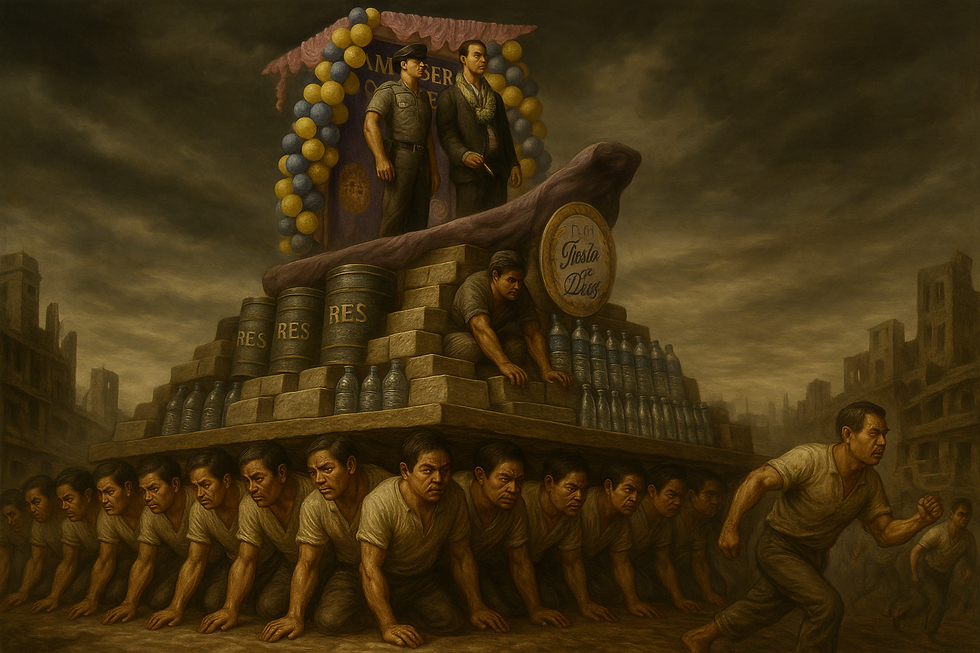
Calling this arrangement volunteerism does not alter its economic reality. Moral language disguises extraction. Sacrifice becomes normalized. Over time, the consequences are predictable: burnout, attrition, declining participation, and widening inequality.
This is not collapse caused by external attack. It is collapse produced by internal design.
No civilized system accepts unpaid compulsory labor as normal. No ethical framework justifies widening gaps between elites and workers under the language of service. When a church becomes a service provider, abuloy becomes taxation. And where taxation exists, the poor always pay more than they should, while the wealthy pay less.
History judges institutions by their outcomes, not by their intentions. Those outcomes are already visible.


